
Watch Our Exclusive James Branson Interview
Australian horror has never been afraid to push boundaries, and writer and director James Branson is taking that tradition to another level with his independent feature Bunny Rabbit. Combining the desolate atmosphere of Mad Max, the unsettling psychological horror of Under the Skin and a particularly gruesome exploration of survival, the film delivers a disturbing journey into a world where humanity has almost completely collapsed.
Joining us for an exclusive Movieland Spotlight interview, Branson opened up about the film’s unusual beginnings, his fascination with Australian cinema, the realities of working with a limited budget and why some audiences have found his cannibal horror surprisingly hilarious.
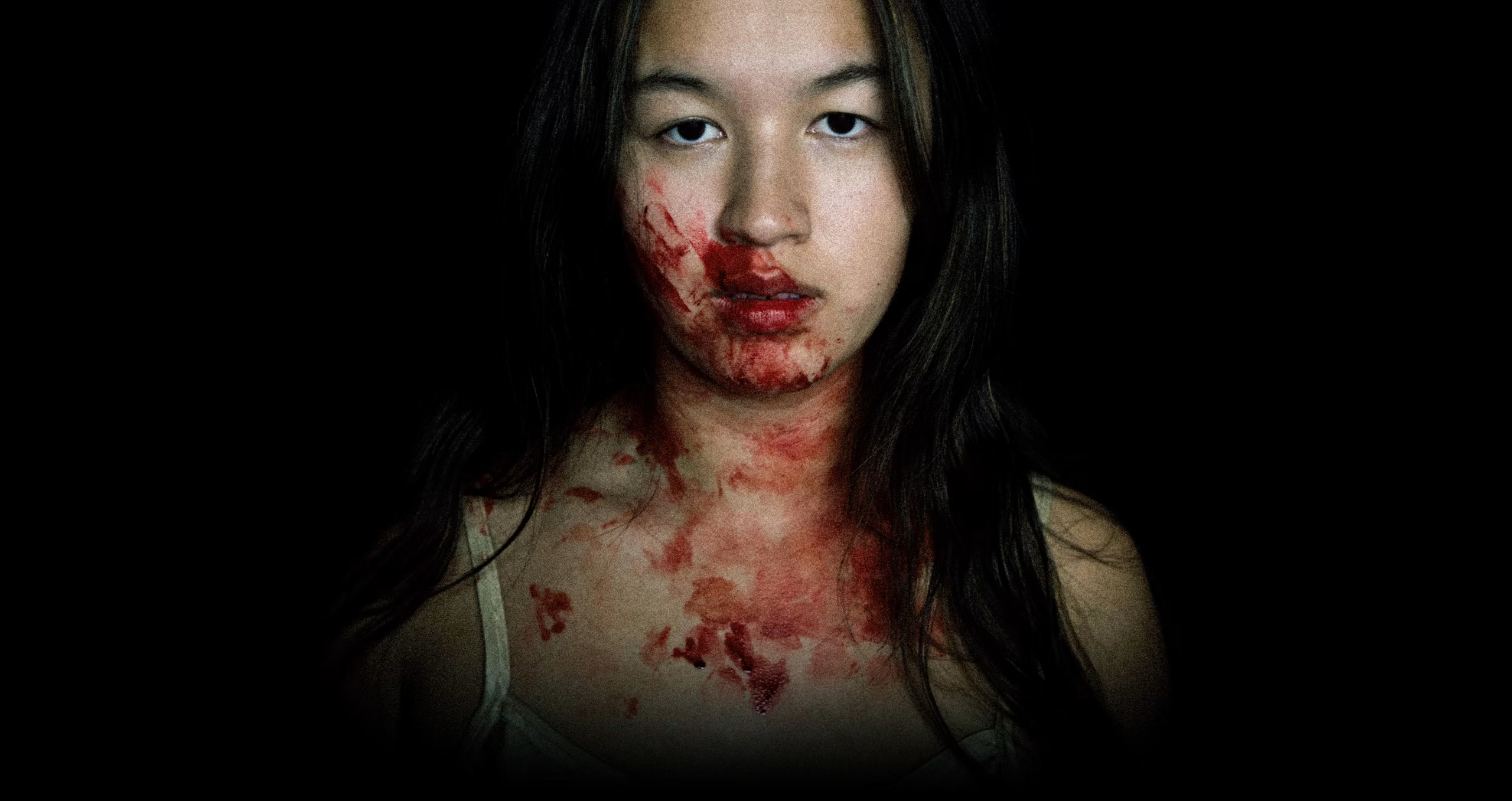
At its heart, Bunny Rabbit follows a young woman attempting to survive in a devastated, post-apocalyptic Australia. Initially determined to keep to herself and avoid the dangers surrounding her, she gradually discovers that survival might require becoming something far more terrifying than the people hunting her.
The Origins of Bunny Rabbit
Branson describes the film as taking place in a Mad Max-style universe, although its origins are considerably more unexpected. In 2019, the filmmaker spent approximately a year documenting a disturbing situation involving a controlling man and five young women in New South Wales. The documentary ultimately remained unreleased after the man was imprisoned and the women moved on with their lives, wishing to maintain their privacy.
The experience, however, inspired Branson to pursue a longer fictional project.
“I really got the bug for putting together a project that wasn’t just the kind of ten-minute short-form work I’d been doing.”
Around 2020, he began developing a fictional story about a young woman escaping a cult. Then came an obsession with George Miller’s Mad Max franchise. Branson repeatedly watched Fury Road and the original trilogy for months, describing Fury Road as possibly the greatest film ever made.
Another major influence was Jonathan Glazer’s Under the Skin, starring Scarlett Johansson. Its slow, atmospheric approach to a mysterious woman hunting men helped shape Branson’s vision.
Eventually, those influences collided. After revisiting Under the Skin, Branson wrote the outline for Bunny Rabbit in approximately two hours. Within two weeks, the screenplay was completed, and filming began just a few months later.
A Descent Into Cannibalism
Despite its disturbing subject matter, Branson revealed that cannibalism wasn’t necessarily part of his original plan.
“I don’t think at the start I thought she’d be a cannibal. It just kind of wrote itself a little bit like that.”
Rather than deliberately attempting to shock audiences, he allowed the story to develop naturally, discovering some of its more confronting elements during production.
One particularly gruesome sequence involving a severed hand caught even its creator off guard. When special effects artist Kim presented the practical prop, Branson suddenly realised how unpleasant the scene would look on screen.
“Oh, that’s disgusting,” he recalled thinking.
Practical Gore on a Limited Budget
With a production budget of approximately $70,000, Bunny Rabbit required considerable creativity.
Branson confirmed that roughly 95 per cent of the film’s blood and gore effects were practical, with only one notable digital effect involving a severe neck injury.
Limited time and money meant that experimentation was often impossible. Once a scene worked, the production needed to move forward.
Although Branson is pleased with the finished film, he hopes future projects will provide opportunities for more ambitious action sequences and elaborate stunt work.
Watch the Bunny Rabbit Trailer
Inspired by Australia’s Bushfires
One of the film’s most striking elements is its connection to the devastating Australian bushfires of 2019 and 2020. Branson revealed that the opening fire footage was genuine material captured by a camera attached to a New South Wales Rural Fire Service truck.
The terrifying images show flames rapidly overwhelming the surrounding landscape. For Branson, those events provided the foundation for imagining a future Australia consumed by relentless environmental destruction.
The film explores a world where bushfires have become increasingly severe, smoke has rendered cities uninhabitable and communities face an endless cycle of devastation.
While shooting in a bushfire-affected region, the production also encountered locals with extraordinary survival stories.
One account involved a fire reportedly travelling through the atmosphere before descending upon a town kilometres away. The story was subsequently incorporated into the film.
Kate Wilson as Bunny
Central to the film is Kate Wilson, whose portrayal of Bunny demanded both physical endurance and emotional restraint.
Branson explained that Wilson’s willingness to embrace uncomfortable situations made her particularly suited to the role.
Whether covered in fake blood, thrown around during action sequences or required to perform disturbing material, she approached the production without complaint.
However, it was her understated acting style that truly impressed him.
The Brutality of Australian Horror
When our conversation turned to the Australian horror industry, Branson suggested that local productions possess a particular willingness to embrace unpleasant, confronting material.
“I’ve been told that Australian horror is a lot more nasty, which is nice to hear.”
He pointed towards the work of the Philippou brothers and other independent filmmakers as examples of Australia’s uncompromising approach.
Beyond the violence, he believes Australia’s landscapes provide filmmakers with an extraordinary natural advantage.
Remote bushland, isolated roads and seemingly endless stretches of wilderness create an atmosphere of danger without requiring elaborate sets.
When Horror Becomes Comedy
Perhaps the biggest surprise for Branson has been the wildly different reactions Bunny Rabbit has received during its festival screenings.
At the Perth Horror Film Festival, audiences laughed throughout the screening, responding to the violence and dark humour in ways the filmmaker hadn’t anticipated.
Other screenings produced dramatically different responses, with audiences describing the experience as deeply disturbing.
For Branson, the contrast demonstrates the fascinating relationship between horror and comedy.
Bunny Rabbit: Official Synopsis
In the aftermath of a climate apocalypse, a young woman roams the ruins of a world she never got to grow up in.
Raised on scavenged books and B-movies, she lives alone in an old shack she once shared with her father.
Supplies are scarce and food is running out. There’s nothing left to hunt.
Nothing except other people…
Where to Watch Bunny Rabbit
Bunny Rabbit is available to rent or buy directly from the film’s official website. Support independent Australian filmmaking and discover James Branson’s disturbing post-apocalyptic horror.
Watch Bunny Rabbit