
When you watch Hijack on Apple TV, the tension feels suffocating. Seven hours. One aircraft. Hundreds of lives. And at the centre of it all, Sam Nelson, played with magnetic restraint by Idris Elba. Behind the camera shaping that pressure cooker is British director Jim Field Smith, a filmmaker who never actually planned to become one.
“I kind of got started in the film industry by accident really,” Smith tells Movieland. “I hadn’t grown up wanting to be a director. I wasn’t running around in my backyard like Spielberg shooting Super 8 films.”
Instead, his path was organic. Childhood creativity with writer George Kay led to short films, comedy sketches and eventually professional work.
“I didn’t go to film school. I didn’t have this giant strategy. It just kind of emerged as something I could do and something I enjoyed doing.”
Before Hijack, Smith and Kay created Criminal, a Netflix drama set entirely inside a police interview room. It was a bold experiment in restriction.
“What if we told a big ambitious crime drama but just in one room?” Smith explains. “You put the crime into the head of the viewer. It becomes this intense cat and mouse between suspect and detective.”
Hijack became the natural evolution of that idea.
“We sort of said Hijack is ‘Criminal with wings’.”
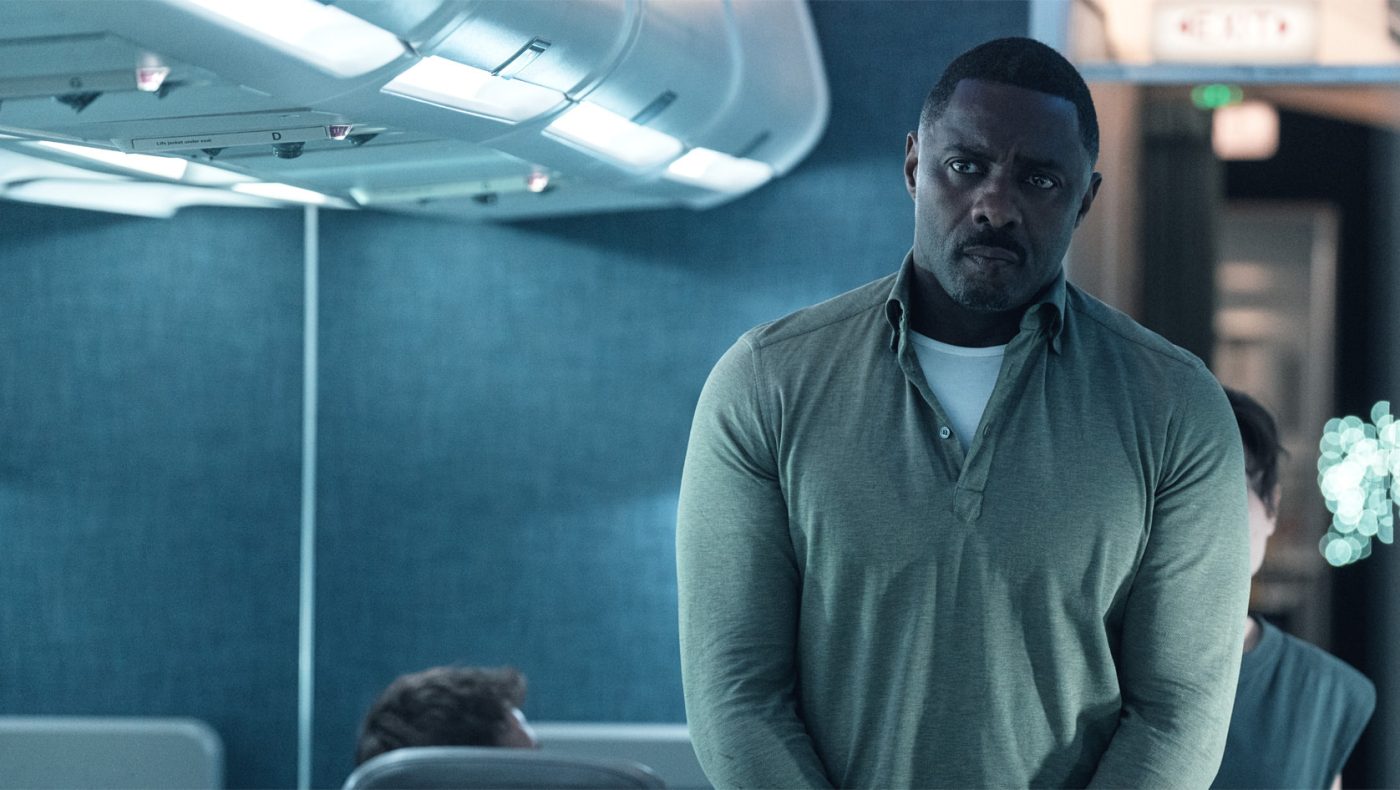
The concept was deceptively simple: real time storytelling across seven hours aboard a hijacked plane. But simplicity was the hook.
“If something is too big and too noisy, you can’t really explore character. Hijack is a big thrilling roller coaster, but it’s also a character study. We’re turning the screw on Sam Nelson and seeing how he performs under pressure.”
Working with Idris Elba became central to the series’ identity.
“He’s like the sun in the universe of the show,” Smith says. “Everything orbits around him.”
Season one established Sam as a reluctant passenger caught in crisis. Season two flips expectations.
“We wanted to push him into a darker place. In season one, he didn’t choose to be there. In season two, he’s slightly more the architect of the problem.”
The evolution allowed Smith to explore Elba in new ways.
“At the end of season two, he is physically, literally and metaphorically on his knees. I’ve not really seen him like that before.”
When season two was announced, audiences had the obvious reaction:
“How unlucky can one guy be?”

Smith anticipated that response and leaned into it deliberately. The opening episode of season two mirrors season one in structure, teasing the idea that history may repeat itself. “I wanted the audience going, ‘Surely not. Surely he’s not just getting on a train and it’s happening again.’” But Apple’s weekly release model enhanced the twist.
“I wanted people to get to the end of episode one, experience that twist, and not be able to watch episode two straight away.”
It is controlled storytelling at its sharpest. Season two shifts from the skies to Berlin’s underground rail system. For Smith, repetition would have been creatively complacent. “If we’d done season two on another airplane, we wouldn’t have been teaching ourselves anything new.” Instead, he chose one of the most logistically challenging environments imaginable: a real working train depot in Berlin.
If you have not yet boarded the flight or stepped onto that train, now is the time. With two gripping seasons now streaming on Apple TV, Hijack proves that tension does not need spectacle alone. It needs character, precision and a director willing to push both audience and himself into uncomfortable territory.
Jim Field Smith may have arrived in filmmaking “by accident,” but there is nothing accidental about the razor sharp intensity of Hijack.